
In UV DTF crystal label production, have you ever experienced random ink misting, blurred edges, or visible spots on transparent stickers, even when using the same ink and film? These defects can lead to wasted materials and rejected products, while the actual cause remains difficult to identify.
For many small and medium-sized UV DTF printing workshops, maintaining a constant temperature and humidity throughout the year is not always practical. During dry seasons, static electricity on AB film becomes more noticeable. Even with unchanged ink and film, operators may encounter unpredictable ink misting and printing defects that are difficult to reproduce and troubleshoot.
Although minor ink misting may not always affect transfer performance, visible contamination on transparent finished labels is a serious quality issue, especially for businesses selling finished crystal labels.
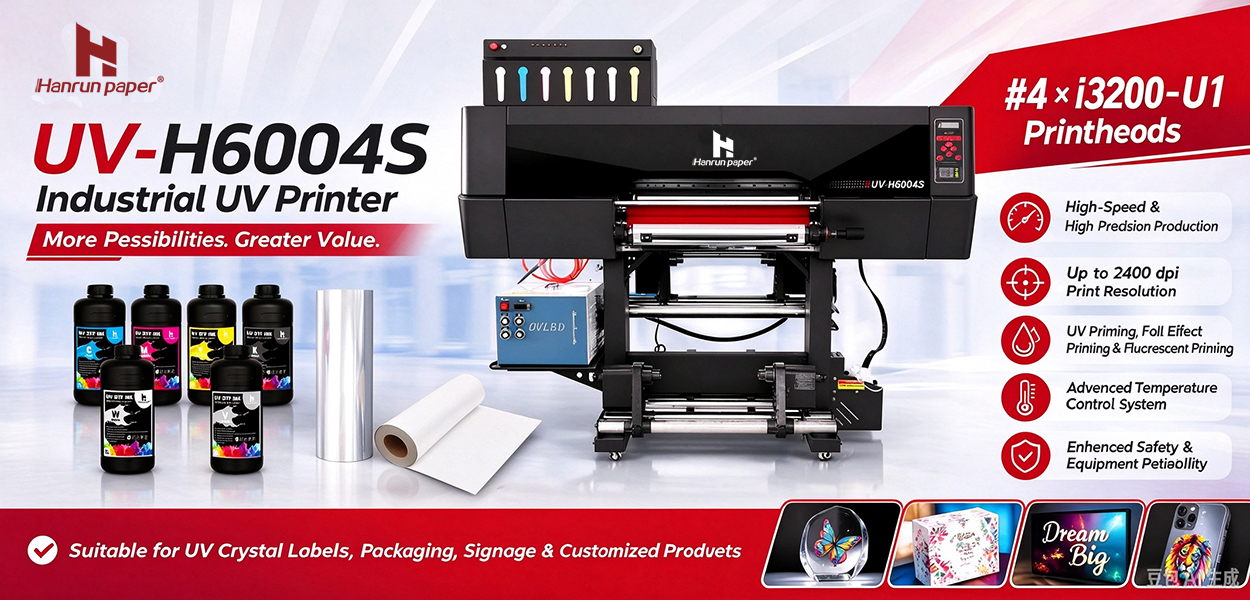
To address these challenges, Hanrun Paper has upgraded its UV-H6004S Roll-to-Roll UV DTF Printer. An optional plasma anti-static bar, combined with a series of mechanical improvements, helps reduce static-related printing defects and improve overall AB film lamination stability.
Static electricity is only part of the challenge in UV DTF production. Consistent lamination pressure, stable film feeding, and reliable roller performance are equally important for maintaining production quality.
The UV-H6004S incorporates several mechanical improvements designed around these real production requirements.
Pneumatic Lamination System vs. Electric Adjustment Systems
Unlike many UV DTF printers that rely on manually adjusting the lifting bar, the Hanrun UV-H6004S features a pneumatic lamination system.
Instead of relying on the operator's experience to adjust the lifting height and estimate the pressure, users can set the air pressure to a specific value. This helps maintain more consistent lamination pressure across different production batches.
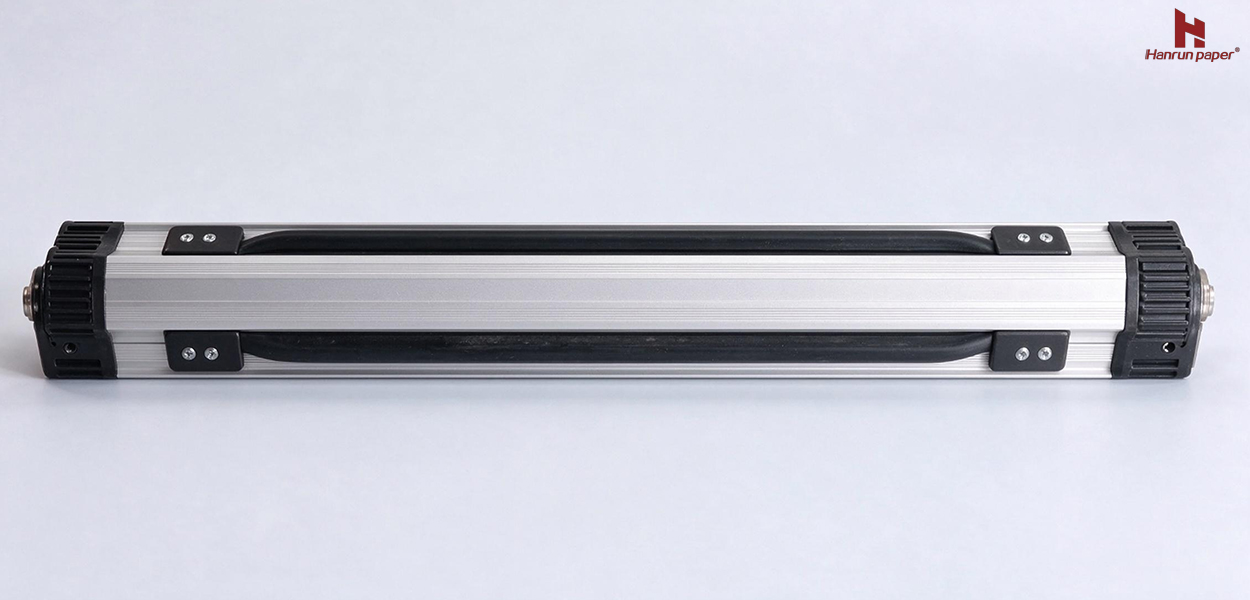
By comparison, conventional electric adjustment systems that depend on manually setting the lifting bar height can be more sensitive to operator experience, making consistent lamination results more difficult to achieve.
Different production tolerances in 2-inch and 3-inch film cores can sometimes cause slipping during operation.
To address this issue, Hanrun's engineering team added a dedicated anti-slip belt mechanism. Under high lamination tension, a slipping film core can pull the AB film out of position, potentially causing alignment problems and lamination failures.
This additional mechanical design helps maintain stable film feeding, particularly during continuous production.
The UV-H6004S also features media holders that are compatible with both 2-inch and 3-inch film cores as standard, eliminating the need for customers to frequently change or replace core adapters.
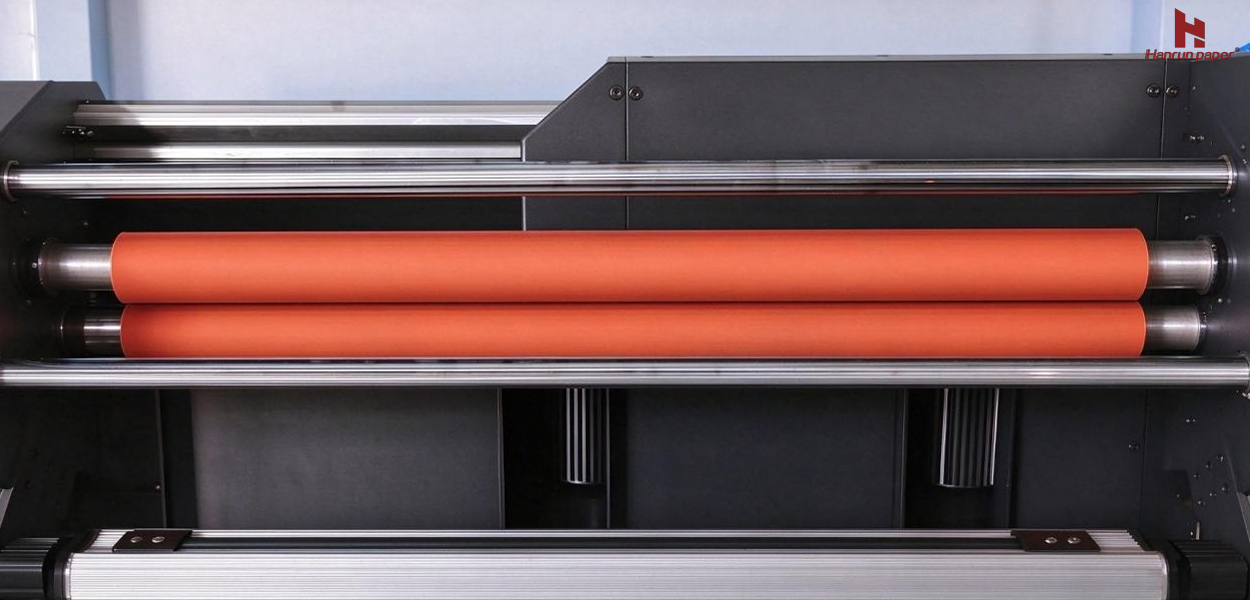
The UV-H6004S uses a large-diameter pressure roller to distribute pressure more evenly across the width of the film.
This helps reduce trapped air and bubble formation during AB film lamination, improving the consistency of the finished transfer film.
Some budget-oriented machines use smaller-diameter, lower-cost rollers, which may provide less effective pressure distribution.
In addition, the heated roller is equipped with an independent over-temperature protection mechanism. This helps prevent excessive heating caused by temperature-control faults, reducing the risk of roller damage, burning, or rupture.
Machine stability starts with component selection.
The Hanrun UV-H6004S comes standard with THK precision linear guides and Leadshine stepper motors. These core components play an important role in carriage positioning accuracy, motion stability, and long-term equipment performance.
High-precision industrial components generally involve higher manufacturing costs than standard alternatives. However, component quality directly affects the machine's ability to maintain reliable performance during long production cycles.
Before delivery, every UV-H6004S must pass a 72-hour continuous no-load running test.
Extended operation helps release mechanical stress in screws and assembled structures while exposing potential problems that may not appear during short inspection cycles, such as loose fasteners or positioning deviations.
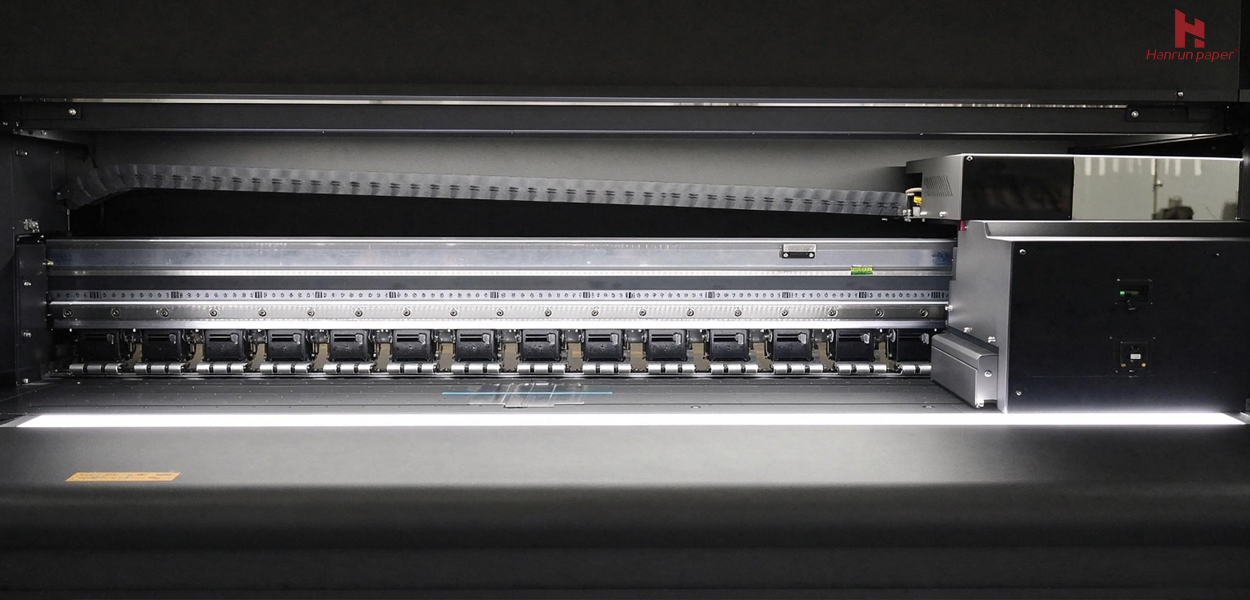
Hanrun Paper also records the continuous running process on video for each machine. This provides an additional quality-control reference and helps verify that the equipment has completed the required pre-delivery testing.
The UV-H6004S features a four-printhead mounting base. Three printheads can be installed for initial production, while the remaining position is reserved for future expansion.
If a printing business later decides to introduce fluorescent ink applications, an additional printhead can be installed without replacing the entire machine.
The printer also features a liquid-cooled UV curing system, designed to provide stable UV output and consistent ink curing during production.
This combination of expandable hardware and stable curing technology helps businesses prepare for changing production requirements.
Selecting the right UV printing technology requires understanding the actual performance requirements of the finished product.
For UV DTF crystal labels, the final transfer adhesion depends heavily on the adhesive layer and the characteristics of the application surface.
Crystal labels are not designed for repeated exposure to high-temperature, high-pressure washing conditions. Under such conditions, label edges may gradually lift after repeated washing cycles.
For applications requiring greater resistance to high-temperature and high-pressure cleaning, Hanrun Paper recommends considering direct-to-object UV printing solutions such as the UV-H9060 or UV-H6090, depending on the substrate and application requirements.
Yes. The UV-H6004S can also support TPU film printing, but the production settings need to be adjusted.
For this application:
☑️Turn off the lamination function.
☑️Increase the pneumatic pressure setting as required by the process.
☑️Use a two-white, one-color, and one-varnish printing configuration.
The printing process should be tested and adjusted according to the specific TPU material and finished product requirements.
Many printing machines on the market focus primarily on providing basic printing functions. However, the challenges faced by production workshops often go beyond printhead performance and printing speed.
Random ink misting, film slippage, inconsistent lamination pressure, and alignment deviations can all result in hidden production costs.
At Hanrun Paper, product development starts with identifying these practical production problems. From mechanical structure improvements and core component selection to strict pre-delivery testing, each stage is designed to improve equipment reliability and reduce avoidable production losses.
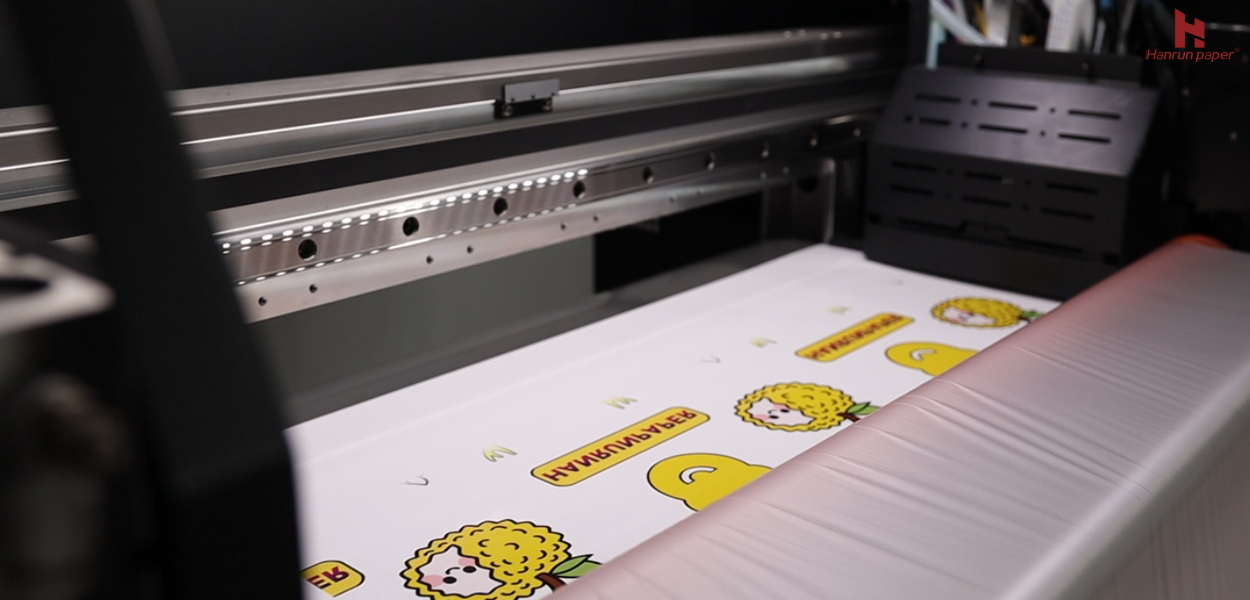
The upgraded Hanrun UV-H6004S Roll-to-Roll UV DTF Printer reflects this engineering approach. By combining optional plasma static control, pneumatic lamination, anti-slip film feeding, precision components, and mandatory 72-hour testing, it provides a more stable production solution for UV DTF crystal label manufacturers.
For printing businesses looking to improve production consistency and finished-label quality, contact Hanrun Paper's sales team to request a sample printing test and complete technical specifications.

