
As global demand for on-demand customization and small-batch apparel production continues to grow, DTF (Direct-to-Film) technology is evolving into a mainstream digital textile solution. However, in real-world production environments, DTF workflows remain highly fragmented, with key processes such as printing, powdering, curing, cutting, and heat pressing often run as separate stages connected by manual or semi-automated handling. This results in unstable efficiency, inconsistent output quality, and limited scalability for mass production.
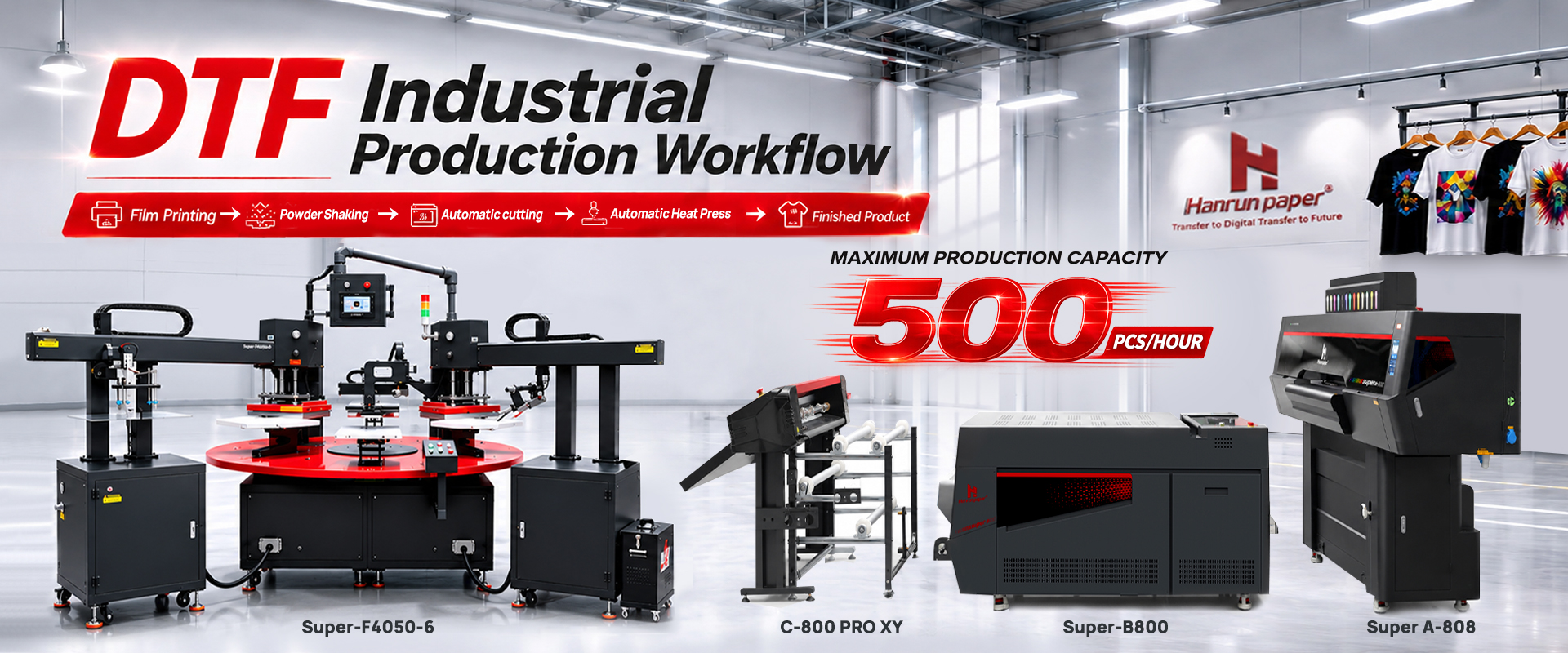
With order cycles shortening and labor costs rising, the traditional “segmented equipment + manual transfer” model is revealing structural inefficiencies and driving the industry toward integrated, standardized production systems.
Hanrun Paper Unveils End-to-End Industrial DTF Workflow System
To address industry pain points, Hanrun Paper has developed an end-to-end DTF workflow that unifies the entire production process—from printing to final garment finishing—into a closed-loop system.
Unlike conventional machine-centric approaches, this system prioritizes production stability, process integration, and long-term operational efficiency, driving the shift from equipment-driven operations to system-driven manufacturing.
Core Equipment Drives Stable and Scalable Industrial Production
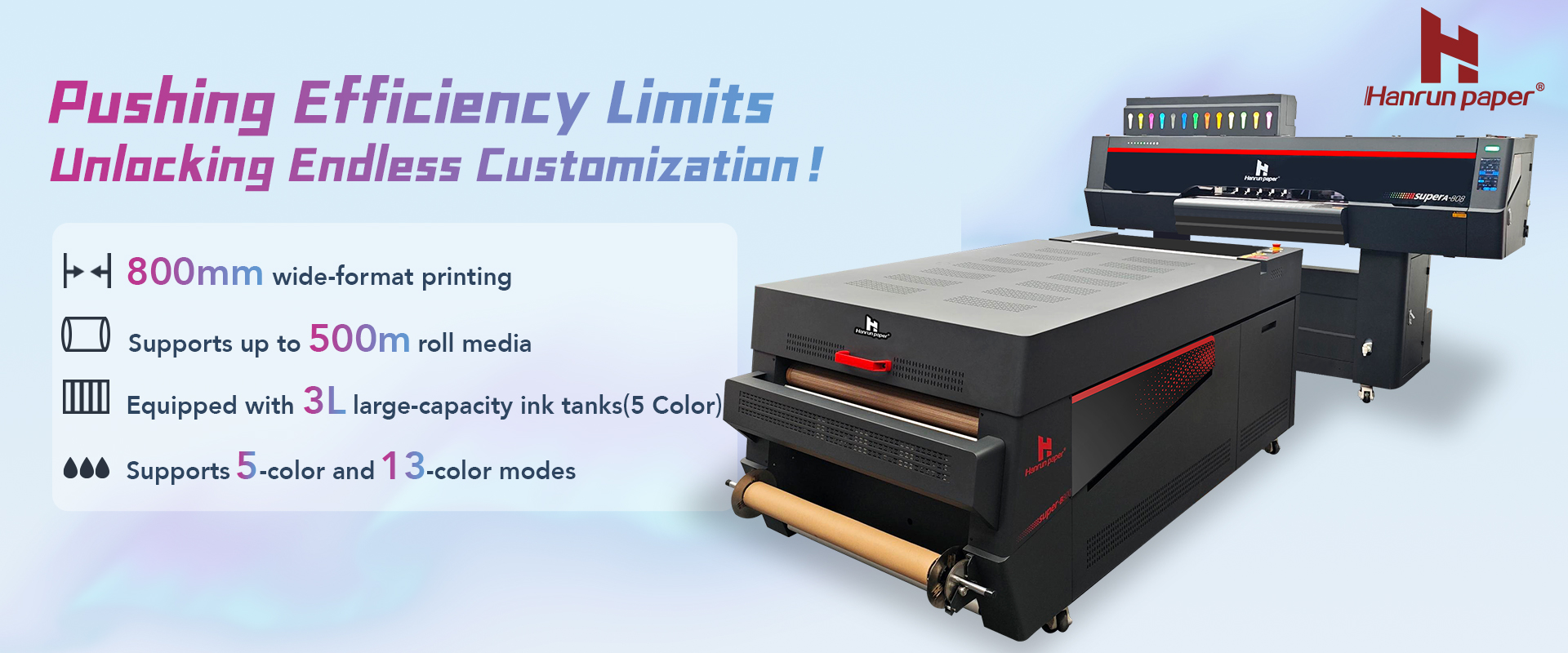
Hanrun Paper has engineered a stable, efficient, and scalable DTF industrial production system:
The Super A-808 DTF Printer ensures stable output and high-precision color reproduction, minimizing production variation for consistent industrial-grade performance. The Super B-800 automatic powdering and curing system reduces manual intervention while improving process standardization. The C-800 Pro XY automatic cutting system optimizes material utilization and supports continuous production for short runs and customized orders. The six-station automatic heat press system enables efficient batch transfer from film to finished garments, maintaining consistent quality and stable production rhythm across the workflow.
Industry Trend: Stability and Long-Term Cost Efficiency Are Emerging as Key Drivers
As production scales expand, the industry is shifting from equipment-centric strategies to long-term operational value, alongside a rapid transition from single-machine competition to full-chain solution competition.
In this context, system integration capability has emerged as a key competitive factor, with production variability, process stability, and labor dependency directly shaping cost structures and profit margins.
Hanrun Paper’s Integrated Ecosystem Strategy
Hanrun Paper is developing an integrated ecosystem across DTF printing equipment, consumables, process support, and application services.
Through enhanced system stability, production efficiency, and long-term cost optimization, the company enables global textile manufacturers to accelerate the transition toward standardized, scalable, and sustainable digital production.
Conclusion
As DTF printing moves into a more mature stage of industrialization, the future of the digital textile industry will be defined by companies offering end-to-end integrated solutions.
Hanrun Paper will continue to advance this transformation, delivering more stable, efficient, and cost-effective DTF production systems for global customers.

